
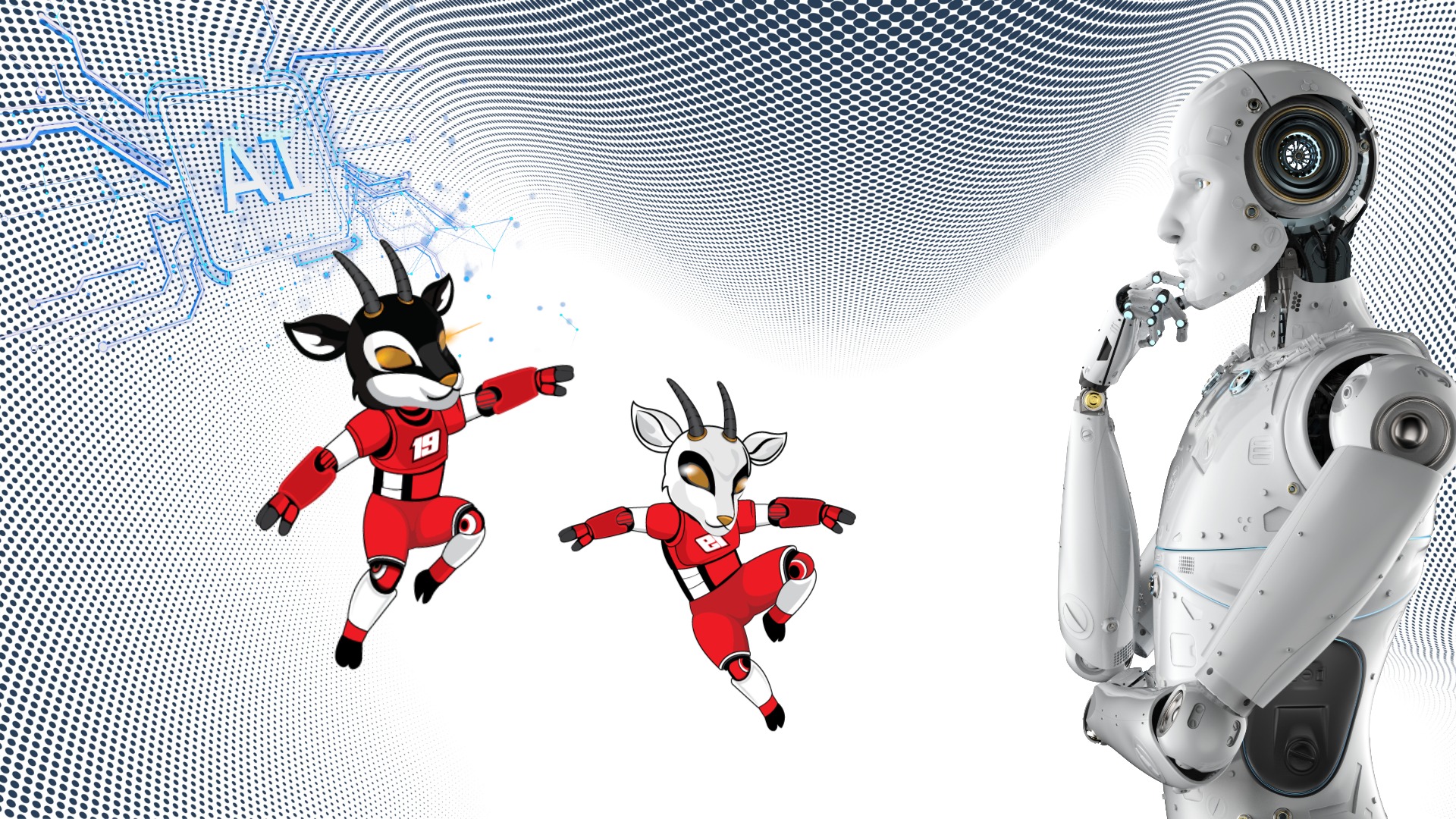

Artificial Intelligent Robot (AI-Bot) Was derived from the Robosot category. This category aims to allow researchers to explore robotic autonomous control development through the Robot Operating System (ROS) platform which offers lower development costs with vast support from the robotic community across the world.
"Machine learning doesn't replace doctors—it empowers them to make better decisions with unprecedented insight into patient data."
SUB CATEGORY RULES
AiBOT See Grab Place Challenge
Objective
- The robot must autonomously detect (See), pick up (Grab), and place (Place) objects in designated target locations within the shortest possible time.
- This challenge enhances real-world applications such as warehouse automation, robotic assistance, and smart logistics.
Competition Rules & Structure
- Robot Capabilities
- Fully autonomous operation (No manual remote control).
- Grasping mechanism with servo arms or robotic grippers.
- Challenge Phases
- Phase 1 (See): The robot navigates the field and detects the assigned object using its vision system. (Start from the START room and scan colour 1).
- Phase 2 (Grab): The robot autonomously picks up the object. (Detect and grab the assigned object).
- Phase 3 (Place): The robot places the object into a designated area within the shortest time. (Put the object in designated place in START room).
- Robot Requirements
- Must utilize Robot Operating System (ROS).
- Equipped with camera or scanning sensors for object detection.
- Includes robotic arm and gripper for object manipulation.
- Uses SLAM (Simultaneous Localization and Mapping) for navigation.
- Lidar (Light Detection and Ranging).
- Object Identification:
- Each object in the rooms will be marked with either:
- A symbol/image/sticker colour for visual identification.
- Robots must be capable of detecting and processing identification types for task completion.
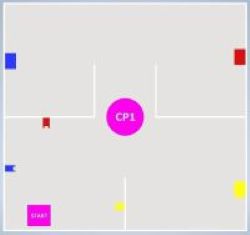
AiBOT See-Grab-Place Challenge - Each object in the rooms will be marked with either:
AiBOT Voice Command Challenge
The AiBOT Voice-Command Challenge is part of the AiBOT (Artificial Intelligent Robot) Category, which focuses on the development of autonomous robots using the Robot Operating System (ROS).
Challenge Objective
The robot must complete tasks by understanding and responding to voice commands. It must navigate through three room missions and successfully provide predefined task-completion feedback within the shortest time.Competition Rules & Structure
- Robot Capabilities
- Voice Recognition: The robot must understand and process spoken instructions using voice command.
- Autonomous Navigation: The robot must move through rooms and avoid obstacles using SLAM (Simultaneous Localization and Mapping).
- Mission Completion Feedback: The robot must autonomously notify users upon successful completion of a task or mission through predefined feedback mechanisms (voice output)
- Robot Requirements
- Robots must operate using ROS (Robot Operating System).
- Must incorporate LIDAR (Light Detection and Ranging) for obstacle avoidance.
- Must use SLAM (Simultaneous Localization and Mapping) for navigation.
- All robots must operate autonomously without remote control.
Example ROBOT ROBOTICS
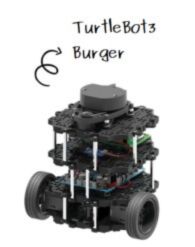
Turtlebot3 Burger
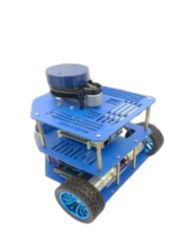
Bveeta Mini
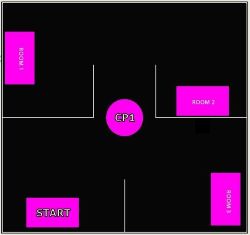
AiBOT Voice Command Challenge Field
JOIN US
REGISTRATION GUIDE
| Category | Sub-Category | Pengurus Pasukan | Coach/Lecturer | Participant/Student | Lokasi |
|---|---|---|---|---|---|
| Ai-Bot | Voice-command Challenge | 1 | 1 | 2 | Perpustakaan (Bilik Ibnu Sina) |
| See-Grab-Place Challenge | 1 | 2 |
| PESANAN : | Mohon sediakan Sijil Penyertaan (Tambahan) untuk Ketua Delegasi setiap Institusi |
| Mohon sediakan Sijil Penyertaan (Tambahan) untuk Pengurus Pasukan bagi setiap kategori |
Personalized Treatment Planning
Machine learning algorithms analyze vast amounts of patient data to recommend personalized treatment plans. By considering genetic factors, medical history, lifestyle choices, and treatment responses from similar cases, AI systems can suggest optimal therapeutic approaches.
Genetic Analysis
Personalized medicine based on individual genetic profiles and biomarkers for targeted therapy selection.
Outcome Prediction
Predictive models that forecast treatment effectiveness and potential side effects before implementation.
Drug Safety
AI-powered systems that identify potential drug interactions and adverse reactions in real-time.
Addressing Implementation Challenges
Data Privacy & Security
Ensuring patient data protection while enabling AI analysis requires robust cybersecurity measures and compliance with healthcare regulations.
Healthcare Professional Training
Medical staff need comprehensive training to effectively integrate AI tools into their clinical workflow and decision-making processes.
Implementation Costs
High initial investment in AI infrastructure and ongoing maintenance costs present barriers for smaller healthcare facilities.
System Integration
Seamlessly integrating AI solutions with existing hospital information systems and electronic health records.
The Future of AI in Healthcare
The convergence of machine learning, big data analytics, and medical expertise is creating unprecedented opportunities to improve patient care and health outcomes. As technology continues to advance, we can expect even more sophisticated AI applications in healthcare.
Widespread AI Adoption
Majority of hospitals will integrate AI-powered diagnostic tools
Predictive Medicine
AI will predict and prevent diseases before symptoms appear
Personalized Healthcare
Fully customized treatment plans for every individual patient




Community Feedback